

Preventing Knee Injuries During The Rise Of Racquet Sports
by Macauley O’Connor, Physical Therapist PT, DPT and Ryan Andersen, Physical Therapist- DPT, PT
As a physical therapist, I thought I had heard all the most common questions about a patient’s care: “What am I allowed to do with this injury?”; “Why did this pain start in the first place?”; “How often should I be doing my exercises?” However, thinking back on the summer of 2022, I admit I was fully stumped by a new and unexpected question:
“Can I play pickleball?”
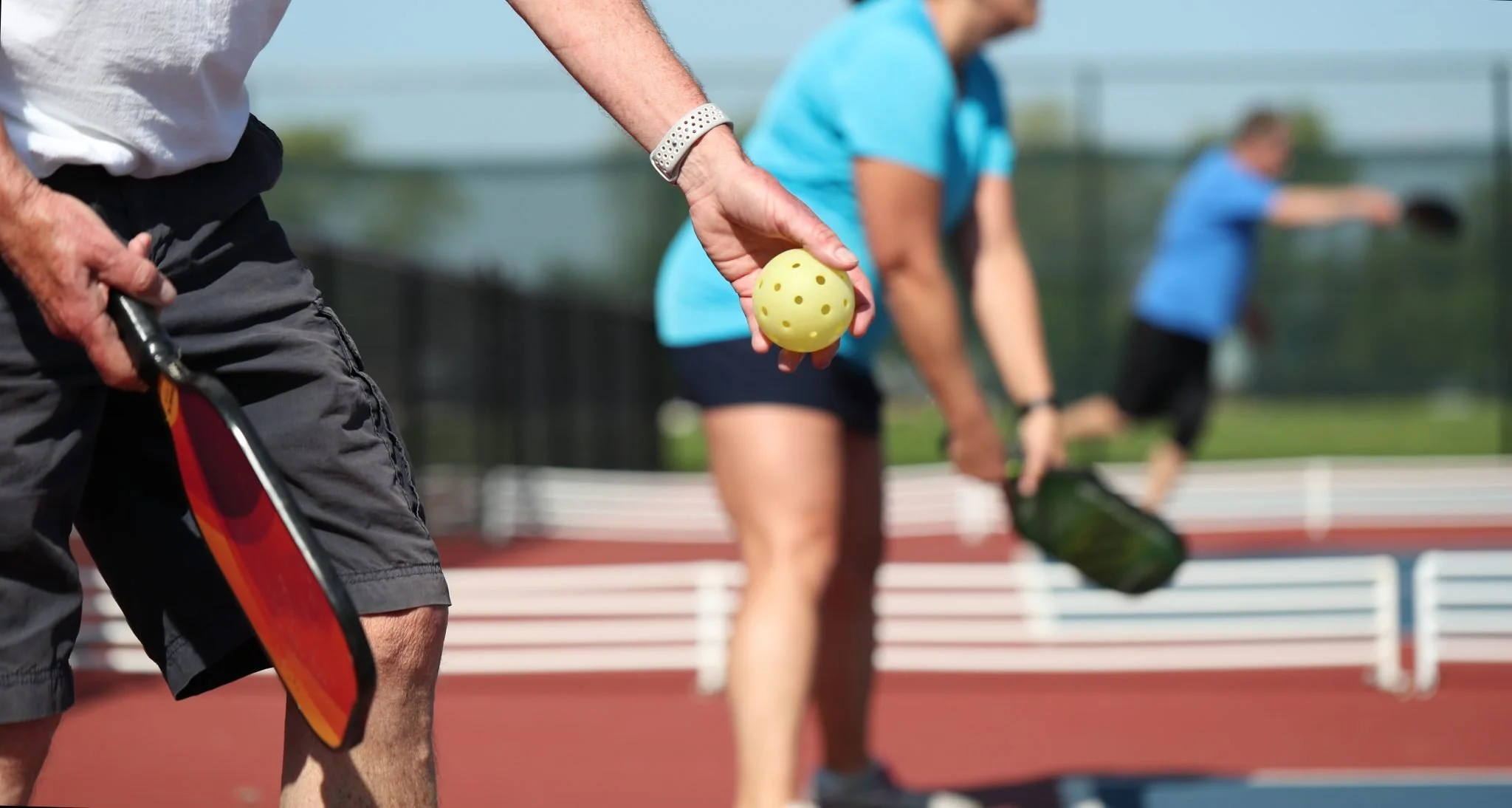
Pickle…ball? I paused in a momentary stupor, palming through the rolodex of my mind for a definition. After drawing a complete blank, I politely stepped away from my patient to frantically search online for a well-informed answer. To summarize my findings, pickleball [noun, pick·le·ball] is not only the fastest growing sport in America, but also a racquet sport like squash, tennis, and badminton. Though I’d never seen a pickleball match, I knew that racquet sports share common physical demands; Cutting, rapid acceleration, pivoting, and lunging are all regular parts of the game, and each skill requires a baseline level of strength and flexibility to perform. Needless to say, I was able to address the question in the end.
All of this to illustrate that racquet sports are on the rise. Therefore, I thought the Tournament of Champions was the perfect time to review one of the more common injuries experienced by these players: knee pain. Mechanical knee pain, or patellofemoral pain, is usually due to improper loading of the knee joint in weight-bearing positions. This often is a result of weakness present in major leg muscle groups, which causes additional stress at the knee. Over time, this repetitive stress can lead to damage in the joints and supporting structures around the knee. But there are simple ways players of all levels can prevent this.
Injury Prevention: Strengthening
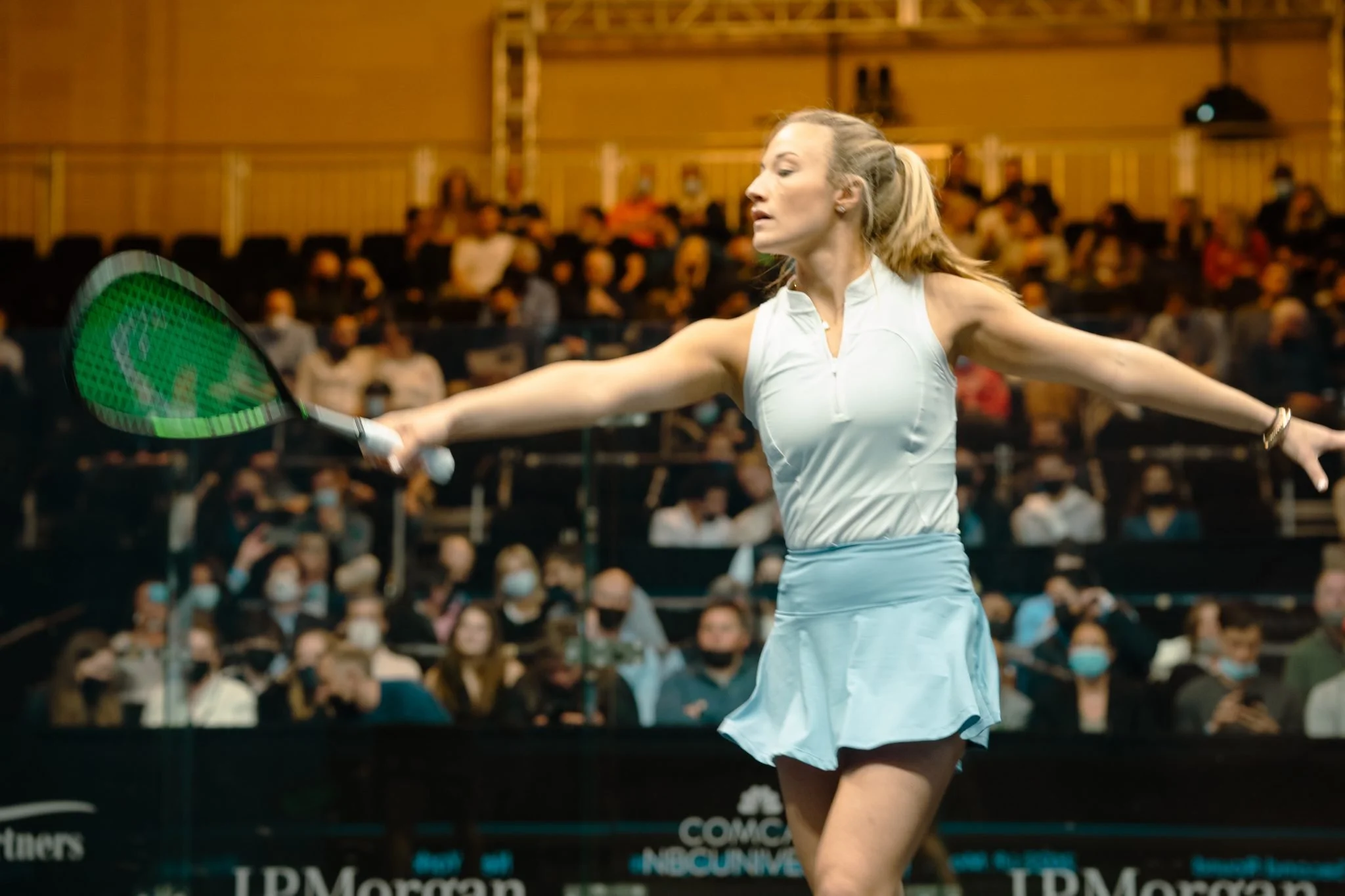
In a high-intensity sport like squash, it’s essential to prepare your body for the strain it will endure during the game. Strength training is important for staying healthy, avoiding injury, and maximizing performance.
Performing activities such as forward, lateral, and oblique lunges prepare the lower extremity for larger range movements, like those required to hit a low and far away shot. These lunges can be done as isotonic movements (moving through a full and comfortable range), isometric (holding a mid-range for a specified period of time), or plyometric (containing some explosive acceleration and deceleration component).
Isolating key muscle groups in strengthening work can also improve the performance capacity of the muscle being worked, and thus the entire system as a whole. Some key groups include:
Quadriceps
Hamstrings
Hip Extensors (glutes)
Hip Abductors
Hip Adductors
Muscles of the lower leg also help to maximize the springiness of our bodies when trying to make quick, decisive movements. The force from the larger muscles of the thigh and hip complex passes through the foot and ankle in both acceleration and deceleration movements, so stability and strength of the lower leg muscles that control these joints will make a difference in a player’s ability to cover larger areas of the court. Some key muscles include:
Gastrocnemius and Soleus
Tibialis Anterior
Tibialis Posterior
Injury Prevention: Flexibility and Mobility
Stretching and mobility work goes hand-in-hand with strength training. Think of it this way, if you’re only able to move through a small range (due to poor joint mobility or poor flexibility) then your ability to be strong through a large range will be limited, resulting in bodily compensation and thus potential injury. Mobility exercises for the lower extremity joints can aid in improved performance as well as help injury prevention.
Warm Up
You absolutely must warm up. Warming up is key to preparing your body for the strain it is about to endure over the course of a game (or several games). Warmup exercises are designed to activate the muscle groups that will be the most active during a game while avoiding overuse by gradually increasing the range of motion as well as speed. Warmup routines include sport-specific movements that an athlete will have to perform during a match, so each warmup is different.
Post-game Cooldown:
Integrating low-intensity mobility and stretching exercises can help mitigate the post-game soreness and stiffness we all experience after a hard match. Taking time to cool down properly can be vital in preventing injuries and maintaining a healthy system through a multi-match tournament.
Of course, if you find yourself in pain (or just want to improve your game), seeing a physical therapist in person is key. Your therapist will be able to guide you through proper techniques, stances, and exercises no matter your athletic level. They will even be able to help you improve your warmup and cooldown routines, and maybe throw in a hilarious anecdote at the top.